Diver Flags

When people go diving—whether scuba diving, free diving, or snorkeling—it is essential for everyone on the water to use proper safety signals. One of the most important safety tools is the diving flag. A diving flag is displayed on a boat or on a floating buoy to warn other boaters that one or more divers are underwater in the area. Because divers can be very close to the surface when ascending, descending, or swimming horizontally, even the smallest boat passing too close can be dangerous. Understanding what diving flags mean, how far to stay away, and what actions to take as a boat operator is a key part of responsible boating and helps prevent serious accidents.
What Does a Diving Flag Mean?
A diving flag indicates that there is at least one diver below the surface. Divers typically tow a small floating buoy with a flag attached, or the boat supporting them displays the flag itself. This warning system tells other vessels to navigate with caution, slow down, and keep a safe distance. Even in calm water, a diver may be only a few feet below the surface, and their air bubbles might be the only visible sign aside from the flag. The diving flag essentially says: “Danger—divers underwater. Keep away and operate carefully.”
Because dive sites are not limited to a particular type of area, you can find diving flags almost anywhere: lakes, rivers, coastal waters, bays, and busy channels. For this reason, boaters must stay alert at all times and be ready to react properly when a diving flag comes into view.
The Two Types of Diver-Down Flags
There are two standardized flags used around the world to signal diving activity. Although similar in purpose, they have distinct appearances and uses.
1. The Diver Down Flag (Red with a White Diagonal Stripe)
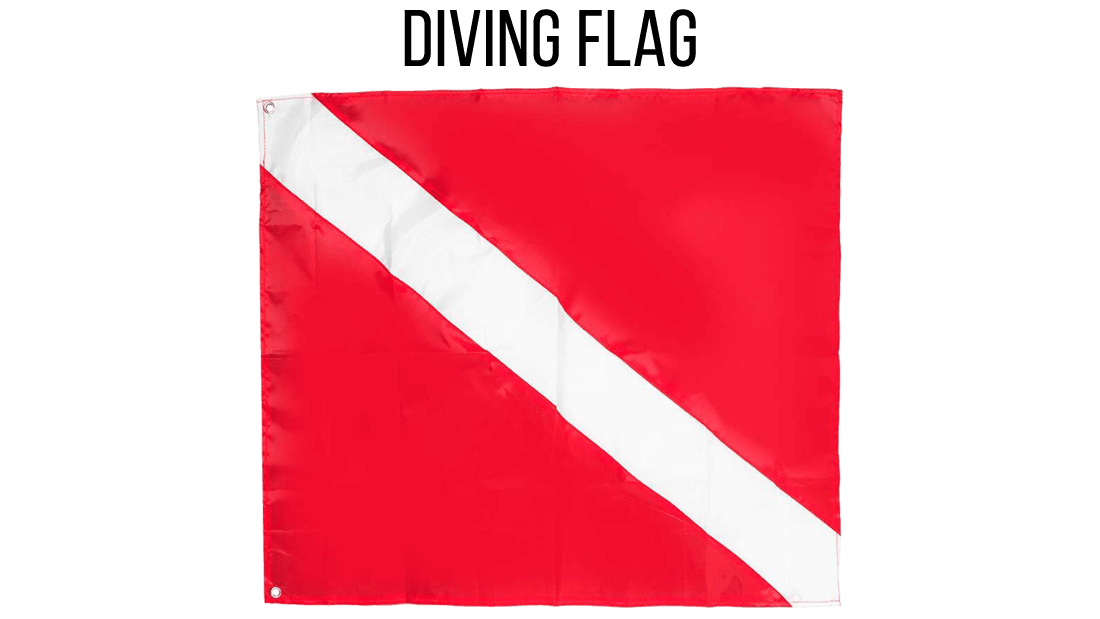
This is the most widely recognized diving flag in North America. It is a red flag with a white diagonal stripe running from the upper left corner to the lower right corner. This flag is typically seen on buoys, floats, or the dive boat itself. It signals to all nearby vessels that divers are currently underwater and that they must keep clear and operate at slow speed. Most recreational divers use this flag during typical diving excursions.
2. The International Code Flag Alpha (White and Blue)
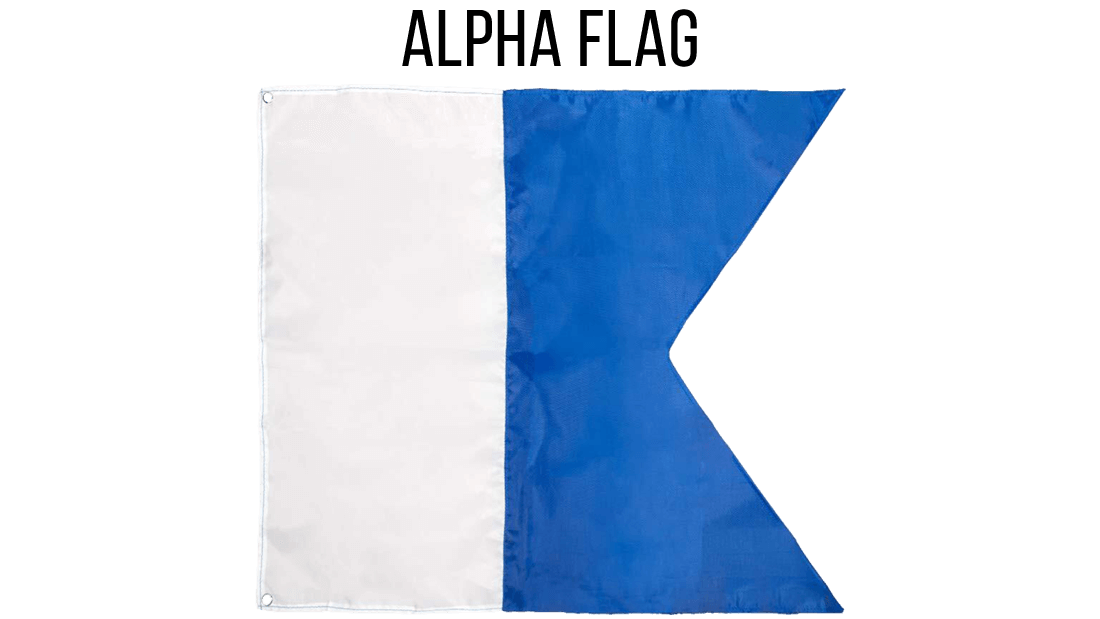
The Code Flag Alpha, part of the International Code of Signals, is white with a large vertical blue swallowtail section. This flag means: “I have a diver down; keep well clear and operate at slow speed.” It is used internationally and is especially common on vessels operating offshore or in areas with heavy maritime traffic. In many regions, the Code Alfa flag is required for boats engaged in professional diving operations or scientific work.
While both flags serve the same essential purpose, the red-and-white diver down flag is more common in recreational environments, while the Alpha flag is standard in international waters and on vessels following maritime regulations. Some dive boats display both.
Actions You Should Take as a Boat Operator
If you’re operating a boat and spot a diving flag, your first priority is to slow down and alter your course to stay well clear of the diving area. The law and common safe-boating practices require you to keep your distance for the safety of both the divers and your passengers. This applies whether you are driving a small fishing boat, a personal watercraft, or a larger recreational vessel.
Here are the minimum safe-distance requirements:
-
In open water: Stay at least 300 feet (100 metres) away from a diver-down flag or buoy.
-
In narrow areas, inlets, rivers, or navigation channels: Keep a minimum distance of 100 feet (30 metres).
These distances exist because divers may move unpredictably, currents may push them away from their starting point, and their ascent patterns may vary. Even if the diver appears close to the dive boat, you cannot assume they will stay in one place. Small errors in navigation from the boat operator or an unexpected ascent by the diver can quickly lead to dangerous situations.
In addition to keeping your distance, you must reduce your speed. Slow speeds reduce the risk of propeller strikes, wave disturbances, and sudden accidents. A slow approach also allows you more time to adjust your course if you spot a diver farther from the flag.
Watch for Bubbles at the Surface
Even if you have already adjusted your course, you should stay extra alert when passing near a dive area. One very important sign to look for is bubbles breaking the surface. A steady stream of bubbles usually indicates that a diver is underwater directly below that spot. Sometimes divers drift away from their flag or buoy without noticing. In other cases, current or swell conditions push the diver away from the original location.
Because of this, never rely solely on the position of the boat or the buoy. Always scan the water for bubbles, snorkels, or faint shapes beneath the surface. This habit could easily prevent a collision or injury.
Do All Dive Boats Need to Display a Diver Down Flag?
Yes. Any boat involved in diving activities should always display an appropriate diving flag. This applies whether divers are entering the water from the boat, returning to the boat, or actively diving at a distance while towing a buoy. Displaying the flag is not just a courtesy—it is a critical safety requirement in many jurisdictions and an essential part of protecting divers from boat traffic.
Even small groups of snorkelers benefit from using a flag, especially in busy areas or where visibility is reduced. The cost is minimal, but the safety benefits are extremely high.