Western Rivers System: A Complete Boater’s Guide
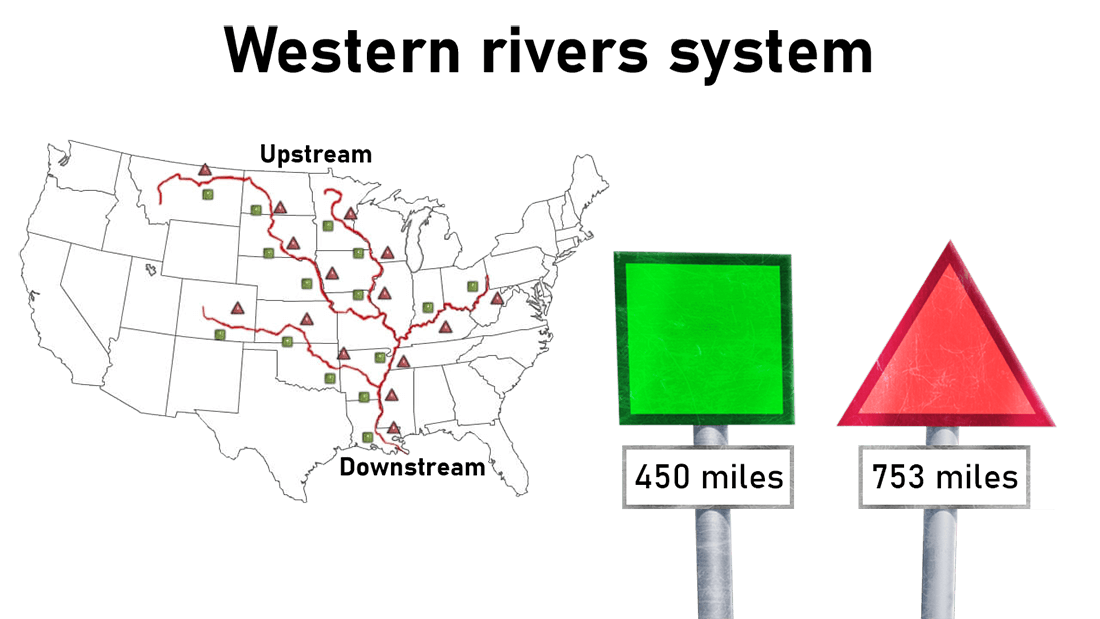
The Western Rivers System:
The Western Rivers refer to the vast network of rivers that drain the western and central parts of the United States—primarily those that flow into the Mississippi River system and ultimately to the Gulf of Mexico. This term is commonly used in navigation, geography, and U.S. Army Corps of Engineers terminology to describe inland waterways that support commerce, transportation, irrigation, and regional ecosystems west of the Appalachian Mountains. The Western Rivers system includes major rivers such as the Mississippi, Missouri, Ohio, Arkansas, and Tennessee Rivers, along with hundreds of tributaries and man-made canals that form one of the most extensive inland navigation networks in the world.
1. Definition and Geographic Extent
The Western Rivers System generally includes all navigable inland waters of the Mississippi River and its tributaries west of the Appalachians and east of the Rockies. It encompasses portions of more than 20 U.S. states, stretching from Pennsylvania in the east to Montana and Colorado in the west, and from Minnesota in the north to Louisiana and Texas in the south.
In navigation terms, these rivers are managed as part of the U.S. Inland Waterways System, a network of over 12,000 miles of navigable channels maintained by the U.S. Army Corps of Engineers. This system allows large towboats and barges to carry commodities like grain, coal, petroleum, and steel between inland ports and coastal regions.
2. Major Rivers in the System
a) Mississippi River
The Mississippi River is the backbone of the Western Rivers system. Stretching about 2,350 miles from Lake Itasca, Minnesota, to the Gulf of Mexico, it forms the central transportation corridor of the U.S. The river passes through or borders 10 states and receives water from more than 30 major tributaries. It is divided into three main sections:
-
Upper Mississippi (Minneapolis to Cairo, Illinois)
-
Lower Mississippi (Cairo to the Gulf of Mexico)
-
Missouri and Ohio River tributaries, which join at Cairo and define much of the river’s flow and sediment patterns.
b) Missouri River
The Missouri River, known as the “Big Muddy,” is the longest river in North America at about 2,341 miles. It begins in the Rocky Mountains of western Montana and flows southeast until it meets the Mississippi River at St. Louis, Missouri. Historically, the Missouri served as a major route for westward expansion and continues to support navigation, irrigation, and hydroelectric power.
c) Ohio River
The Ohio River originates at the confluence of the Allegheny and Monongahela Rivers in Pittsburgh, Pennsylvania, and flows 981 miles southwest to join the Mississippi River at Cairo, Illinois. It serves as a natural boundary for several states and is one of the most heavily used commercial waterways in the United States.
d) Arkansas River
Originating in the Rocky Mountains of Colorado, the Arkansas River travels southeast through Kansas, Oklahoma, and Arkansas before joining the Mississippi River near the city of Napoleon, Arkansas. Parts of it are navigable, especially in its lower course, where locks and dams maintain commercial traffic.
e) Tennessee River
A major tributary of the Ohio River, the Tennessee River flows for 652 miles through the states of Tennessee, Alabama, Mississippi, and Kentucky. It is integral to the Tennessee Valley Authority (TVA) system, providing hydroelectric power, navigation, and flood control.
3. Navigation and Commerce
The Western Rivers form the backbone of America’s inland waterway transportation system. The U.S. Army Corps of Engineers maintains over 200 locks and dams, ensuring year-round navigation for barges carrying vital commodities. Each year, more than 500 million tons of cargo move through these waterways. Barges can carry massive loads—one barge can transport the equivalent of 15 railcars or 60 trucks—making this system both economically efficient and environmentally friendly.
Key ports include St. Louis, Memphis, Cincinnati, Pittsburgh, and New Orleans, connecting inland industries with global export terminals at the Gulf of Mexico.
4. Environmental and Historical Importance
The Western Rivers also hold immense ecological and historical significance. They support diverse ecosystems of fish, birds, and wetlands that depend on natural flooding cycles. Historically, these rivers were central to Native American settlements, European exploration, and westward expansion. Today, they continue to serve as vital sources of drinking water, recreation, irrigation, and hydroelectric energy.
5. Challenges and Modern Management
Modern management of the Western Rivers faces challenges such as sedimentation, aging infrastructure, flooding, and pollution. Climate change has increased the frequency of extreme weather events, affecting navigation and flood control. In response, agencies like the Army Corps of Engineers and EPA coordinate efforts to maintain sustainable navigation and environmental health through dredging, levee maintenance, and restoration projects.
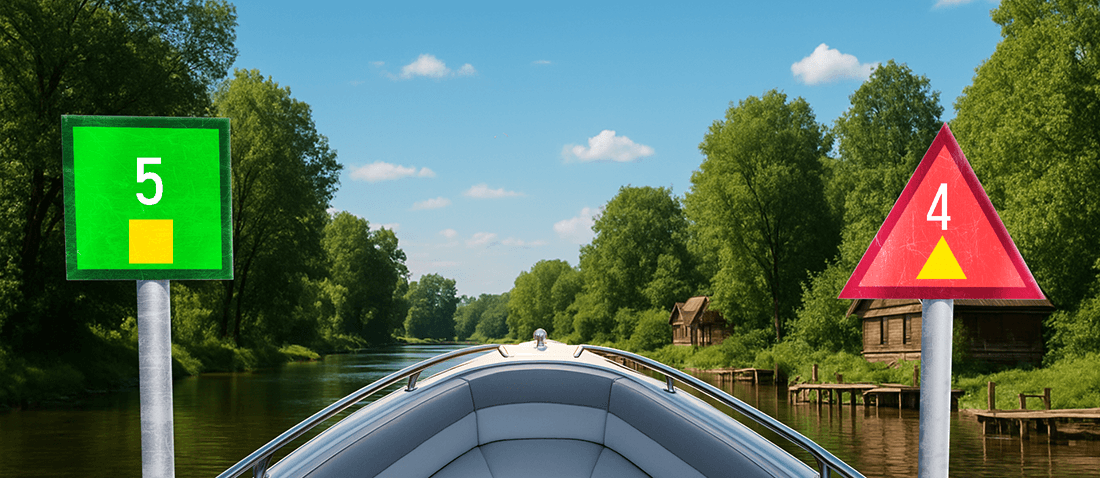
The Western Rivers System uses a unique navigation marker setup found along major inland waterways like the Mississippi and Ohio Rivers. To understand these rules—and operate confidently—take our boating safety course. It teaches the Western Rivers System, navigation basics, and safety laws, helping you earn your boating license with ease.