What is the difference between displacement and planing hulls?
What are displacement hulls?
A displacement hull is a type of boat hull designed to move through the water rather than on top of it. Instead of riding up and planing, a displacement hull pushes water aside as it moves, creating a wave pattern that limits its maximum efficient speed.
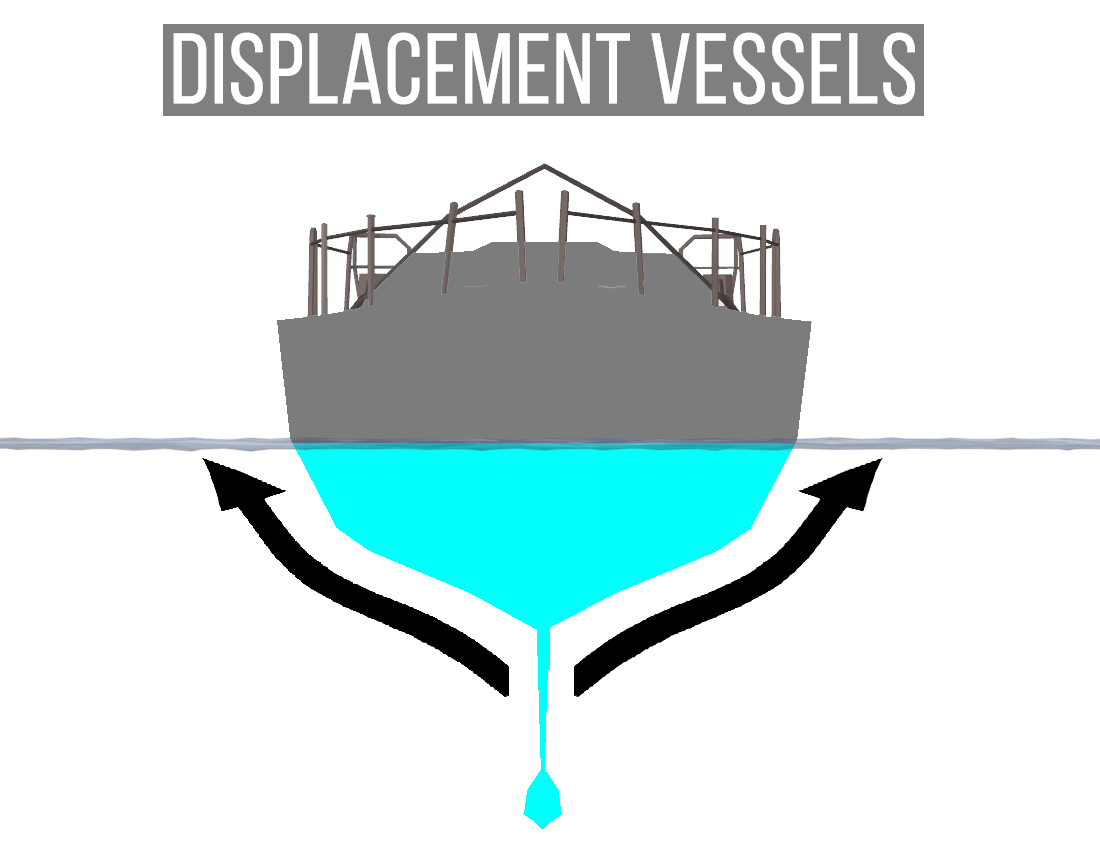
Key Characteristics of Displacement Hulls
1. Rounded or V-shaped underwater profile
They usually have smooth, curved shapes that maximize efficiency at lower speeds.
2. Designed for stability, not speed
They move efficiently at slow to moderate speeds but can’t plane or go very fast.
3. Predictable handling
They offer smooth, stable performance — especially in waves — making them great for cruising or heavy loads.
4. High displacement
They sit deeper in the water and push more water aside due to their weight and shape.
How Fast Can They Go?
Displacement hulls have a natural "speed limit" shaped by physics, known as hull speed.
The formula:
Hull Speed (knots) ≈ 1.34 × √(waterline length in feet)
Boats with displacement hulls can exceed hull speed, but only with massive increases in power — usually not worth it.
Common Examples of Displacement Hull Boats
-
Sailboats (traditional keelboats)
-
Trawlers
-
Large yachts
-
Cargo ships & tankers
-
Canoes & kayaks (yes! they’re technically displacement hulls)
-
Tugboats
Advantages
-
Extremely fuel-efficient at low speeds
-
Excellent stability in rough water
-
Can carry heavy loads
-
Smooth, comfortable ride
Disadvantages
-
Slow top speed
-
Not ideal for water sports or fast travel
-
Deeper draft limits access to shallow water
What are planing hulls?
A planing hull is designed to rise up and skim on top of the water once it reaches enough speed. Instead of continuously pushing water aside (like a displacement hull), a planing hull uses hydrodynamic lift to dramatically reduce drag — allowing the boat to go much faster.
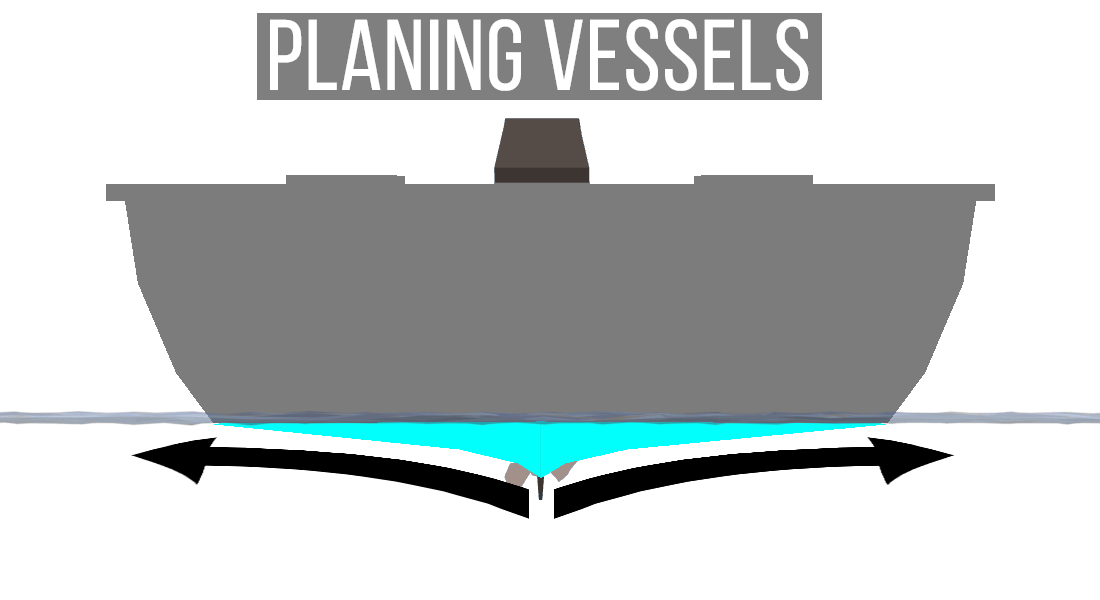
Key Characteristics of Planing Hulls
1. Flat or shallow-V bottoms
This shape creates lift at higher speeds.
2. Two modes: displacement → planing
At slow speeds, they behave like displacement hulls.
At higher speeds, lift builds and they “climb” out of the water.
3. High speed and responsiveness
Planing hulls are agile, quick to turn, and perfect for sports or fast travel.
4. Lighter weight
Most planing-hull boats are relatively light so they can plane efficiently.
How Do They Work?
-
Slow speed:
The boat sits deep, moving through the water. -
Acceleration:
Bow rises, stern digs in — the boat is “getting on plane.” -
On plane:
Most of the hull lifts out of the water, riding primarily on the aft section.
➜ Less drag, more speed, improved fuel efficiency at fast speeds.
Where Do You Find Planing Hulls?
Planing hulls are extremely common on:
-
Bowriders
-
Jet skis / PWCs
-
Wakeboard & wakesurf boats
-
Center consoles (many of them)
-
Runabouts
-
Bass boats
-
Inflatable RIBs
-
High-performance fishing boats
-
Most recreational motorboats under ~30 ft
Advantages
-
Very fast — much higher top speeds than displacement hulls
-
Great for watersports (skiing, wakeboarding, tubing)
-
Shallow draft when on plane, letting you skim over shallower water
-
Responsive handling
Disadvantages
-
Poor efficiency at slow speeds
-
Rougher ride in choppy water compared to displacement hulls
-
Requires strong engine power to climb onto plane
-
Less stable at rest