Upstream vs Downstream meaning when boating
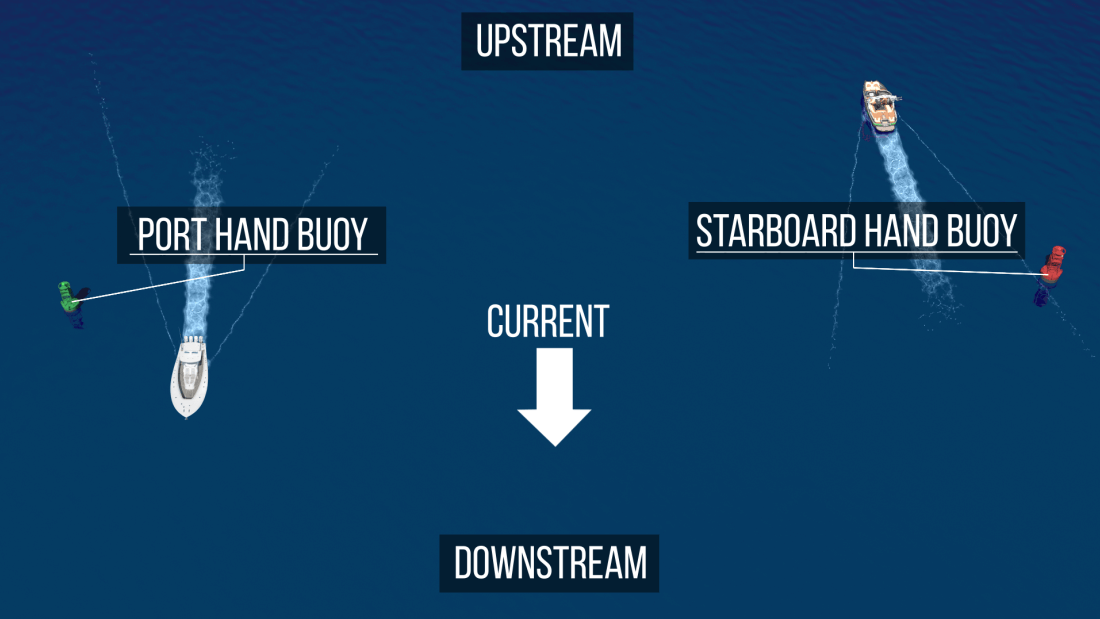
The Core Idea
At the most basic level:
-
Upstream means against the flow of a river.
-
Downstream means with the flow of the river.
Imagine standing on a riverbank. Water naturally flows from a higher elevation to a lower elevation — usually toward a lake, another river, or the ocean. If you walk in the direction the water is flowing, you’re going downstream. If you walk toward the river’s source (mountains, springs), you’re going upstream.
This simple concept becomes the foundation for all other uses of the terms.
Upstream & Downstream in Boating (Super Important for Navigation!)
For boaters — including anyone studying for their boating safety course — understanding upstream vs. downstream is crucial.
When You Are Going Upstream
-
You travel against the current.
-
Your boat may require more power to maintain speed.
-
Steering can feel heavier because the water pushes against you.
-
Debris tends to float toward you (downstream), so visibility matters.
When You Are Going Downstream
-
You travel with the current.
-
You move faster even with less throttle.
-
Steering requires attention, especially on rivers with obstacles.
-
You must anticipate turns in advance because momentum increases.
Why It Matters for Boating Safety
-
River markers and buoy systems may look different depending on direction.
-
Some rivers require portage or special caution zones downstream (like rapids).
-
Towing, anchoring, and docking strategies change dramatically depending on current direction.
-
Collision avoidance rules can shift on narrow rivers with strong current.
Knowing river direction helps you interpret buoys, lights, hazards, and signs more accurately — making your trip safer and smoother.
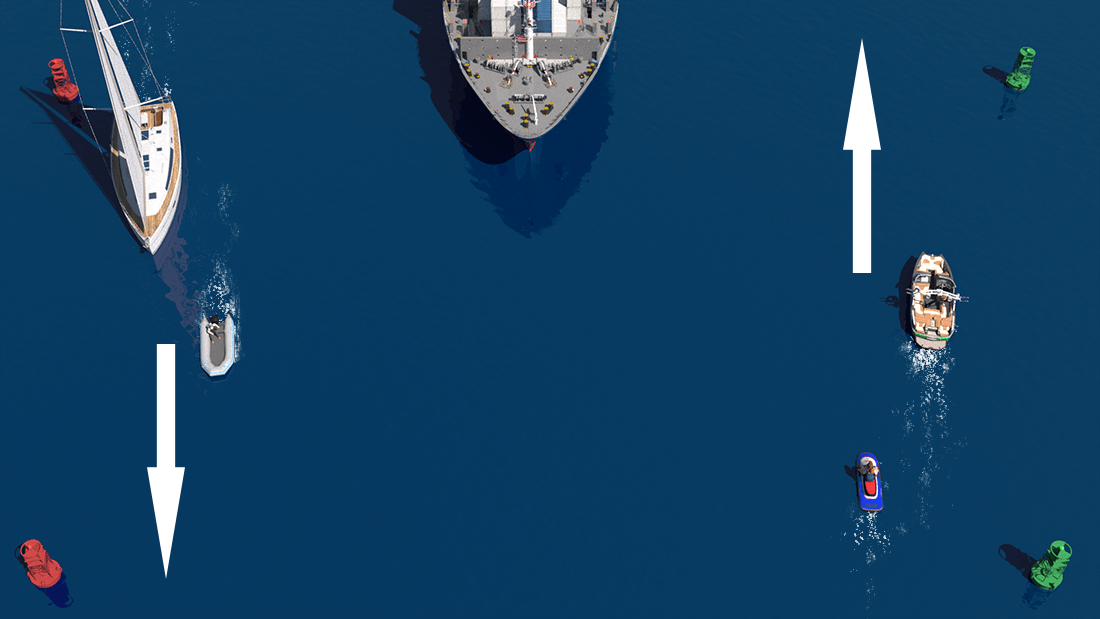
When you’re traveling upstream, you’re moving against the current, so maintaining control, proper speed, and safe navigation becomes even more important. The first key rule is to follow the correct buoy pattern, which helps you stay inside the safe, charted channel. In North America, when you are going upstream—heading from open water toward a river’s source or inland—you should keep the red buoys on your starboard (right) side and the green buoys on your port (left) side. A simple memory trick is “Red Right Returning,” meaning you keep red buoys to your right when returning inland or upstream.
Because you are heading against the flow, your boat will require more throttle to maintain speed and maneuverability. Stay alert for floating debris, which often drifts downstream toward you. Steering tends to be more responsive upstream because the current pushes toward the bow, so make smooth, deliberate adjustments.
Always maintain a safe lookout, especially in narrow or winding channels. Give extra space to vessels traveling downstream since they have less ability to slow or change direction quickly. By following buoy markers correctly, adjusting for current, and staying attentive, you ensure a safe and efficient upstream passage.
A Starboard-hand buoy is a navigation buoy that marks the right-hand side of a channel when you are traveling upstream, meaning you’re moving from open water toward a river’s source, marina, or inland area. These buoys are part of the lateral buoyage system used across North America (Region B) to guide boaters safely through marked waterways.
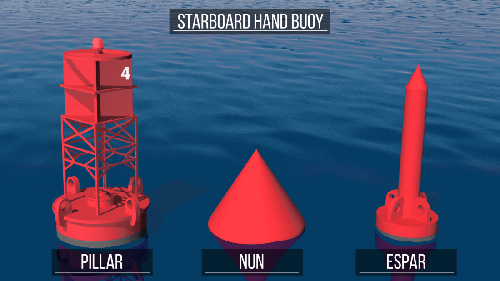
How to Identify a Starboard-Hand Buoy
Starboard-hand buoys have three defining characteristics:
-
Color: Red
-
Shape: Typically conical, often called a nun buoy
-
Topmark/Light (if equipped):
-
Red light
-
Usually flashing in a specific pattern for nighttime navigation
-
What They Mean
A starboard-hand buoy indicates that the safe, navigable channel lies on its left side when traveling downstream, and on its right side when traveling upstream.
To remember the correct rule, boaters use the phrase:
“Red Right Returning.”
This means keep red buoys on your starboard (right) side when returning from open water — which includes navigating upstream.
Purpose
These buoys help boaters:
-
Stay inside safe, dredged channels
-
Avoid hazards like shoals, rocks, or shallow water
-
Understand traffic flow in narrow waterways
A Port-hand buoy marks the left-hand side of a navigable channel when you are traveling upstream—that is, moving from open water toward a river’s source, a harbor, or inland waterways. These buoys are part of the Region B lateral buoyage system used throughout North America to guide safe passage and prevent groundings or collisions.
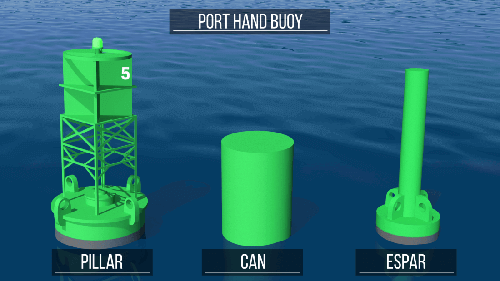
How to Identify a Port-Hand Buoy
Port-hand buoys have three defining features:
-
Color: Green
-
Shape: Cylindrical (also called a can buoy)
-
Lights/Topmarks (if equipped):
-
Green light
-
May flash in a specific pattern for nighttime navigation
-
What a Port-Hand Buoy Means
A port-hand buoy tells you where the safe channel lies depending on your direction:
-
Going upstream (returning inland):
Keep green buoys on your port (left) side. -
Going downstream (toward open water):
Keep green buoys on your starboard (right) side.
This matches the familiar rule:
“Red Right Returning”
…which implies that green buoys stay on your left when returning inland.
Why Port-Hand Buoys Matter
They help you:
-
Stay inside the safe, dredged channel
-
Avoid hazards like shoals or rocks
-
Navigate bends, rivers, and harbors safely
-
Understand traffic patterns on busy waterways
A bifurcation buoy is a lateral navigation buoy that marks a point where a channel splits into two branches. It tells boaters which route is the preferred (main) channel, while still allowing navigation in the secondary channel. These buoys are incredibly important where rivers divide, channels fork, or where two routes converge into one.
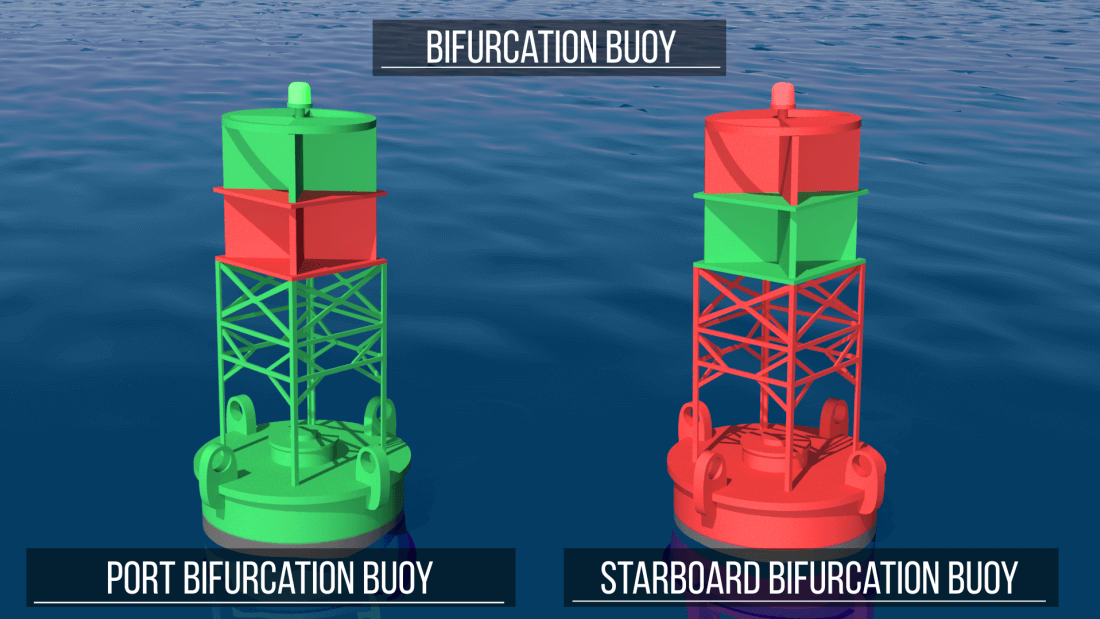
A bifurcation buoy:
Has both red and green colors
Because it marks both sides of the channel split.
Has a specific color pattern
-
Red buoy with a green band → Preferred channel is to the right (starboard).
-
Green buoy with a red band → Preferred channel is to the left (port).
Shape
-
If the main color is red, the buoy is conical (nun-shaped).
-
If the main color is green, the buoy is cylindrical (can-shaped).
Light (if equipped)
-
Flashes match the buoy’s main color.
What a Bifurcation Buoy Tells You
It answers one key question:
Which side should you stay on to follow the main, safest channel?
If the buoy is red with a green band:
Preferred channel is to starboard (your right).
If the buoy is green with a red band:
Preferred channel is to port (your left).
You can take the other branch, but it may be:
-
Narrower
-
Shallower
-
Less maintained
-
Used less often
Why Bifurcation Buoys Matter
They help boaters:
-
Choose the safest, most reliable channel
-
Avoid shoals or low-water areas
-
Navigate complex river junctions efficiently
-
Follow the correct path upstream or downstream